
Opening
The March 2026 total lunar eclipse transformed the full moon into a deep red “blood moon” as Earth passed directly between the sun and the moon.
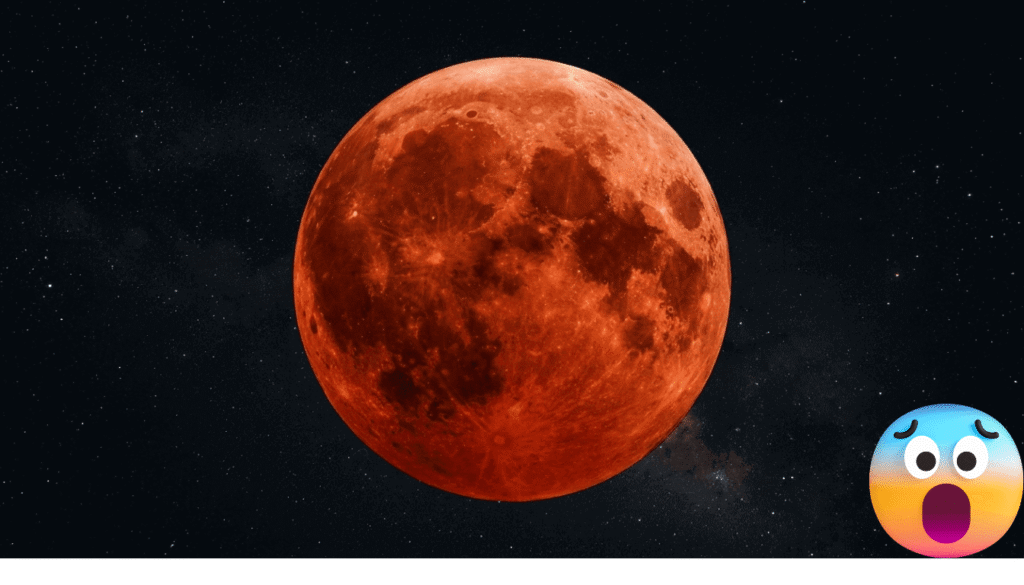
The event was visible across large parts of the United States, including Southern California and Northern Texas, and was fully visible from midnight to early morning,
depending on the time zone. Astronomers confirmed that the eclipse occurred in several phases, gradually becoming more fully visible before returning to a normal full moon.
Clear weather in many areas allowed for widespread viewing and early photography of the celestial event.
Developments
Total Lunar Eclipse 2026 total lunar eclipse followed its standard sequence: penumbral eclipse, partial eclipse, totality, and then a reversal of those phases.
Totality was the peak of the event, when the Moon appeared red due to sunlight being filtered by Earth’s atmosphere and the bending of longer red wavelengths at the Moon’s surface.
In Southern California, observers were advised to begin observing late in the evening as the partial phase developed.
Totality occurred shortly after midnight local time and lasted for about an hour, after which the Moon gradually brightened again. No special eye protection was required for viewing.
In North Texas, the eclipse timing was different due to a time zone change. The partial phase became visible late at night, and totality occurred after midnight Central Time.
The full eclipse window extended into the early morning hours before the Moon completely exited Earth’s shadow.
Astronomy experts emphasized that the lunar eclipse is safe to view with the naked eye. Unlike a solar eclipse, no protective filters are required. Many viewers used binoculars and telescopes to enhance surface detail and capture the reddish glow.
Shortly after the full appearance, the first images of the Blood Moon began to appear online. Photographers captured close-up images of the Moon’s copper hue against dark skies, confirming that the Moon was clearly visible even in areas with low cloud cover.
Important Details
This eclipse occurred during the full moon in March 2026, placing the sun, Earth, and moon in a straight line. This alignment caused Earth’s shadow to fall directly on the lunar surface.
Phases of the eclipse
Penumbral phase: The moon entered Earth’s outer shadow, causing subtle dimming.
Partial phase: A visible dark “bite” appeared as Earth’s inner shadow moved across the moon.
Totality: The moon turned red as it was fully immersed in Earth’s umbra.
Post-totality: The shadow gradually receded until the moon returned to full brightness.
Totality lasted for about an hour in most viewing areas of the continental United States. The entire sequence of eclipse phases lasted several hours.
In Southern California, clear skies in many areas created good viewing conditions. Local astronomy groups encouraged people to look toward the southeast horizon during the peak phase.
In North Texas, weather forecasts indicated generally good viewing conditions in many counties, although cloud cover varied locally.
The red color during totality is caused by Rayleigh scattering. Sunlight passes through Earth’s atmosphere, where shorter blue wavelengths are scattered while longer red wavelengths are bent toward the Moon. The intensity of the red tone can vary depending on atmospheric conditions, such as dust or volcanic particles.
Photography of the event showed a variety of colors, from bright copper to deep crimson, depending on exposure settings and atmospheric clarity.
Impact and Analysis
Total Lunar Eclipse 2026 total lunar eclipse was one of the most visible astronomical events of the year. Because the lunar eclipse can be seen simultaneously across the entire hemisphere, millions of people in North America had the opportunity to witness it.
Unlike solar eclipses, lunar eclipses pose no eye hazard, increasing accessibility. Schools, astronomy clubs, and local observatories promoted public viewing and educational outreach. Many people observed the eclipse from their backyards, rooftops, and open parks.
The release of initial eclipse images also highlighted advances in consumer photography. Amateur astronomers used DSLR cameras, mirrorless systems, and smartphone adapters connected to telescopes to document the blood moon in high resolution.
Experts noted that lunar eclipses occur at least twice a year around the world, but total lunar eclipses visible from a specific area are rare. Weather conditions can further reduce visibility, making clear nights especially important.
Total Lunar Eclipse 2026 event also reinforced public interest in astronomy. Engagement increased on social media platforms during peak totality, and search activity for lunar eclipse times increased in major U.S. cities.
What Happens Next
Astronomers have confirmed that lunar eclipses are regular sky events, but the next total lunar eclipse visible from the same parts of the United States will occur on a different date based on the orbital cycle.
Partial and penumbral eclipses may occur earlier, but they do not produce the same red color seen during totality.
Skywatchers are encouraged to monitor upcoming meteor showers, planetary alignments, and astronomical calendars for future eclipse opportunities. Observatories and space agencies typically publish precise timing schedules months in advance.
As Earth maintains its orbit around the sun and the moon maintains its monthly cycle, future eclipses will again provide opportunities for public viewing, photography, and educational outreach.
FAQ
- What time was theTotal Lunar Eclipse 2026 total lunar eclipse complete?
In most U.S. time zones, the total lunar eclipse occurred just after midnight, and the exact time varies by location. The total phase lasted approximately one hour. - Was special equipment required to view the blood moon?
No. It is safe to view the lunar eclipse with the naked eye. Binoculars or a telescope can enhance visibility, but they are not required. - Why does the moon turn red during a total lunar eclipse?
Earth’s atmosphere filters sunlight, scattering blue light and bending red wavelengths toward the moon, resulting in a red appearance. - When will the next total lunar eclipse be visible in the United States?
The next visible total lunar eclipse depends on orbital alignment and regional visibility. Astronomical calendars provide updated schedules for upcoming events.
Conclusion
Total Lunar Eclipse 2026 total lunar eclipse clearly displayed a blood moon across the United States, including Southern California and North Texas. Clear skies prevailed in many areas and lasted for about an hour, giving millions of people a safe and easy opportunity to witness a rare celestial alignment. Total Lunar Eclipse 2026 Future eclipses will serve as reminders of the dynamics of the Earth-Moon-Sun system, which are predictable but also spectacular to observe.
Pingback: Texas Senate Primaries 2026 Talarico Wins, GOP Runoff Ahead Texas Senate Primaries 2026