
Trump Gas Prices Why Prices Rise or Fall
When people search for Trump gas prices, they usually want to know one thing: did Donald Trump directly lower or raise gas prices?
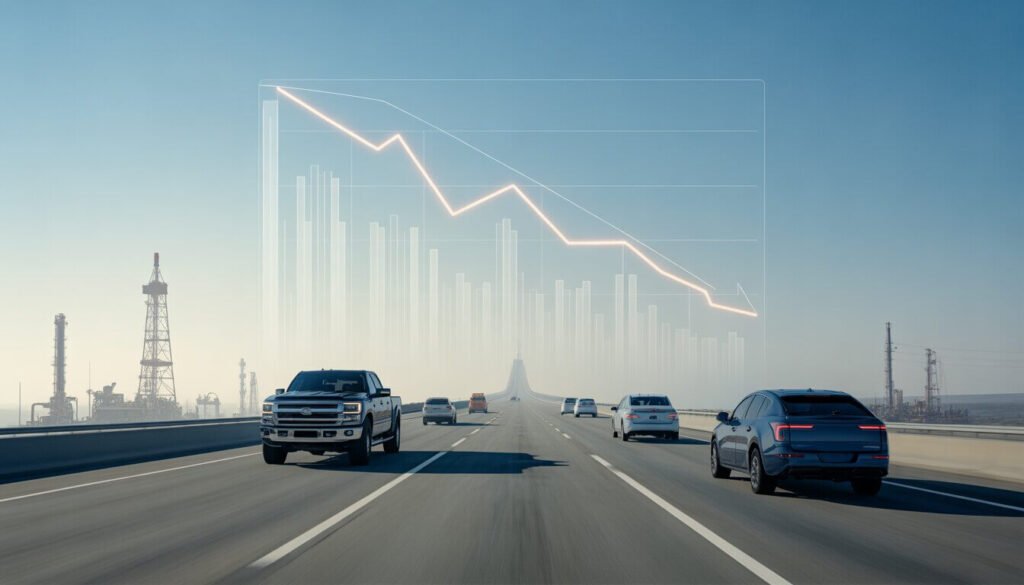
The most accurate answer is that a president can influence gasoline prices, but cannot fully control them. U.S. gas prices mostly move with crude oil costs, refinery capacity, seasonal fuel rules, distribution expenses, taxes, and global events.
Official U.S. data has shown gasoline prices often track crude oil trends, while White House energy actions can shape supply expectations over time.
In early 2025, the Trump administration also announced an energy policy shift aimed at expanding domestic production, but pump prices still depended on broader market conditions.
Also Read__ Renault Duster Mileage Real-World Fuel Economy Guide 2026
What “Trump gas prices” really means
This keyword usually refers to the relationship between Trump-era policies and what Americans paid at the pump. That includes campaign promises, drilling policy, regulation, oil production, and emergency actions tied to fuel supply.
Still, the biggest driver is usually crude oil. The U.S. Energy Information Administration has repeatedly explained that retail gasoline prices generally follow global crude oil prices, even when domestic policy changes are happening at the same time. EIA also projected in January 2025 and January 2026 that average U.S. gasoline prices would trend lower mainly because of lower crude oil prices, not because of one single political decision.
How gas prices actually work
Gas prices are built from several layers. Crude oil is the largest part, but it is not the only one. Refining costs, transportation, marketing, and taxes all matter too.
That is why a president may approve energy-friendly policies and still see gas prices rise. If global oil supply is disrupted, refinery outages occur, or summer-blend fuel rules tighten supply, pump prices can move up anyway. Current reporting in March 2026 shows prices rising sharply because of conflict involving Iran and disruptions around the Strait of Hormuz, even while the Trump administration has pursued actions meant to support fuel supply.
Practical scenarios that affect Trump gas prices
One practical scenario is expanded drilling policy. The White House’s January 20, 2025 “Unleashing American Energy” action signaled support for more fossil fuel development. That can affect expectations and future supply, but it does not guarantee immediate savings at local stations.
Another scenario is an emergency supply response. In March 2026, reporting showed the administration using tools like a Jones Act waiver and discussing additional Strategic Petroleum Reserve actions to ease price pressure. These steps may help at the margin, but analysts noted that relief is often limited and not immediate.
Benefits, challenges, and smart tips
A pro-production energy policy may improve long-term supply confidence. That can be a positive for markets, especially when supported by strong domestic output.
The challenge is that gasoline is still exposed to global shocks. Even a supply-friendly administration cannot shield drivers from every geopolitical event or refinery bottleneck.
A smart tip for readers is to watch oil prices, refinery conditions, and EIA gasoline trend data, not just headlines about one politician. That gives a more realistic view of where prices may go next.
Common mistakes people make
Many people assume the president sets gas prices directly. That is too simple.
Another mistake is judging policy effects too quickly. Some actions influence future supply, not next week’s prices.
A third mistake is ignoring seasonality. Gasoline often costs more in spring and summer because of demand and fuel blend changes, even without a major policy shift.
Frequently Asked Questions
Did Trump directly control gas prices?
No. A president can influence energy policy, but gasoline prices are mainly shaped by oil markets, refining, taxes, and supply disruptions.
Why do gas prices rise even when drilling increases?
Because more drilling does not always create instant supply at the pump. Global crude prices and refining limits still matter.
Are Trump gas prices lower because of policy alone?
Not usually. Price moves are typically the result of several market forces working together, with crude oil as the main driver.
Conclusion
The phrase Trump gas prices is really about how presidential policy interacts with a market the White House does not fully control. Trump-era energy actions can influence supply expectations and emergency response, but crude oil prices, refining, taxes, seasonality, and world events usually matter more in the short term. The clearest way to understand gas prices is to look at the full fuel market, not politics alone. (U.S. Energy Information Administration)
Pingback: No Kings Protests Erupt Nationwide Against Trump Policies No Kings Protests Erupt Nationwide Against Trump Policies
Pingback: Lebanon – The Hidden Gem of the Middle East You Must Visit in 2026 Lebanon The Hidden Gem of the Middle East You Must Visit in 2026