
Lebanon – The Hidden Gem of the Middle East You Must Visit in 2026
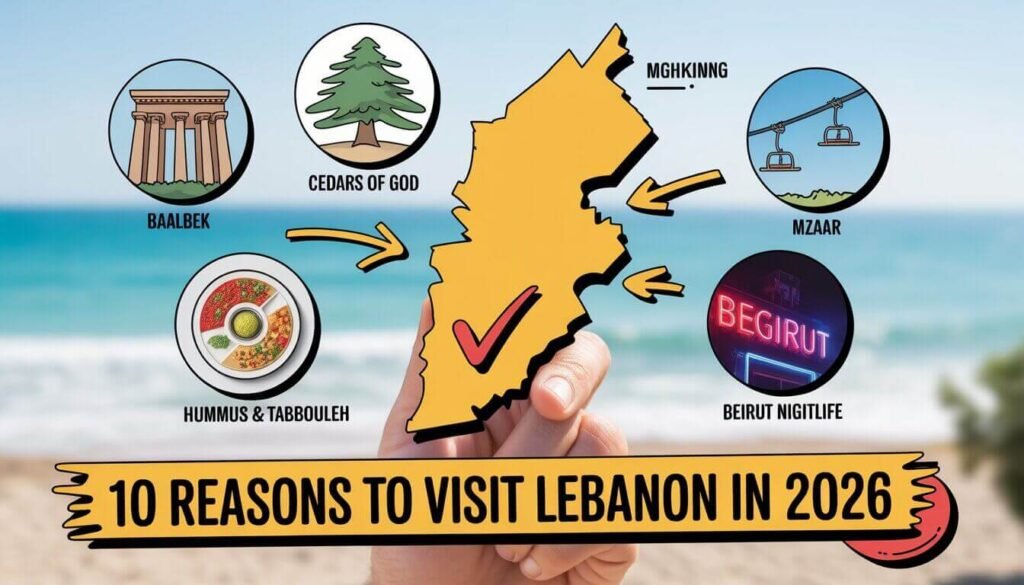
When people think of the Middle East, they often imagine deserts and oil fields. But Lebanon shatters every stereotype. This small, resilient country on the eastern Mediterranean coast packs more history, flavor, and natural beauty than countries three times its size. From the cosmopolitan capital Beirut to the ancient cedar forests of the north, Lebanon offers an unforgettable experience for travelers, food lovers, and history buffs alike.
In this complete guide, we’ll explore why Lebanon deserves a top spot on your travel bucket list, what to see, where to eat, and how to navigate this fascinating nation safely. Whether you’re planning a trip or just curious about the land of the Phoenicians, read on.
Why Lebanon Stands Out in the Middle East
Lebanon is unique. It’s a country where you can ski in the morning and swim in the Mediterranean by afternoon. Its capital, Beirut, has been destroyed and rebuilt seven times, yet remains the “Paris of the East.” The people of are famously hospitable, multilingual (Arabic, French, English widely spoken), and resilient despite economic and political challenges.
For tourists, Lebanon offers:
- 5 UNESCO World Heritage Sites (including Byblos, one of the oldest continuously inhabited cities on earth)
- World-class wineries in the Bekaa Valley
- Some of the best nightlife in the region
- A culinary scene that rivals Paris or Istanbul
If you haven’t considered Lebanon before, now is the time.
A Quick History of Lebanon (In 300 Words)
To understand Lebanon, you need to know its past. The name comes from the Phoenician word lbn meaning “white,” referring to its snow-capped mountains. The Phoenicians, who lived here around 3000 BC, invented the alphabet. Later, was part of the Roman, Byzantine, Arab, Crusader, Mamluk, and Ottoman empires.
After WWI, France took control, and Lebanon gained independence in 1943. For a while, it was the playground of the Middle East. But from 1975 to 1990, a brutal civil war tore the country apart. Then came conflicts with Israel, Syrian occupation, the 2006 July War, the 2020 Beirut port explosion, and a crushing financial crisis.
Yet refuses to die. Today, tourists are slowly returning, drawn by its raw beauty and undying spirit. That’s the magic of Lebanon.
Top 10 Places to Visit in Lebanon
Let’s get practical. Here are the must-see spots when you travel to Lebanon.
1. Beirut – The Heartbeat of Lebanon
No visit to Lebanon starts without Beirut. The capital is chaotic, charming, and addictive. Walk the seaside Corniche, explore the hip Gemmayze and Mar Mikhael neighborhoods with their street art and pubs, and visit the National Museum of Beirut. Don’t miss the remnants of the civil war – they tell a powerful story.
2. Byblos (Jbeil)
A 40-minute drive north of Beirut, Byblos is one of the oldest cities in the world (7000+ years old). Its crusader castle, Phoenician temples, and old souks are a history lover’s dream. And the seafood restaurants? Unforgettable.
3. Jeita Grotto
Recently voted one of the New 7 Wonders of Nature, the Jeita Grotto is a cave system with enormous limestone formations. You take a boat through the lower grotto – a magical experience unique to Lebanon.
4. Baalbek
In the Bekaa Valley lies Baalbek, home to the largest and most impressive Roman ruins ever built. The Temple of Jupiter and Temple of Bacchus will leave you speechless. Baalbek alone is worth the trip to Lebanon.
5. Cedars of God (Bcharre)
Lebanon’s national symbol is the cedar tree. The oldest ones (some over 1000 years old) stand in the Cedars of God forest near Bcharre. Hike, breathe the pure mountain air, and understand why the Phoenicians used this wood to build their ships.
6. Tyre (Sour)
Another ancient Phoenician city, Tyre offers spectacular Roman ruins right on the Mediterranean coast. The Hippodrome here is one of the largest of the Roman world.
7. Sidon (Saida)
Sidon’s Sea Castle and the old souk (including a soap museum) give you a taste of traditional . The fish market is lively and authentic.
8. Zahle
The capital of the Bekaa Valley is famous for its wineries, arak (anise spirit), and the beautiful Berdawni river. Lebanon produces some excellent wines – Château Ksara and Château Musar are global names.
9. Batroun
A coastal gem with a laid-back vibe. Batroun’s old Phoenician wall, lemonade stands, and surf spots attract young Lebanese and tourists alike. Perfect for a chill day.
10. Qadisha Valley
This holy valley is a UNESCO site filled with ancient monasteries carved into cliffs. The Monastery of Saint Anthony of Qozhaya is particularly stunning. Hiking here reveals a spiritual side of Lebanon.
Lebanese Food – Why You’ll Gain 5 Kilos (Happily)
Food is sacred in Lebanon. A typical mezze (appetizers) can include 20+ dishes. You cannot visit without trying:
- Hummus – the smoothest in the world
- Tabbouleh – parsley and bulgur salad with fresh mint
- Kibbeh – minced meat and burghul, raw or fried
- Fattoush – bread salad with sumac
- Man’ouche – Lebanese pizza with thyme or cheese, the national breakfast
- Shawarma – spit-roasted meat wrapped in flatbread
- Sfiha – mini meat pies
- Baklava – sweet pastry with nuts and syrup
And don’t forget Lebanese coffee – thick, strong, and served with dates. After every meal, offer thanks with “Sahtain” (to your health).
Is Lebanon Safe to Visit in 2026?
This is the most common question about . The short answer: yes, with precautions. The security situation can be fluid due to regional tensions (e.g., southern border with Israel), but most tourist areas – Beirut, Byblos, Batroun, Jounieh, the Cedars, and the majority of the Bekaa Valley (except the eastern border) – are safe for visitors.
Tips for staying safe in Lebanon:
- Avoid the southern suburbs of Beirut (Dahiyeh) and areas near the Syrian border.
- Check your embassy’s travel advisory before going.
- Keep your valuables secure; petty theft is rare but possible.
- Use licensed taxis (Uber works in Beirut) and avoid walking alone late at night in unfamiliar areas.
- Respect local customs – dress modestly when visiting religious sites.
Thousands of tourists visit Lebanon every year without issues. The Lebanese people are incredibly welcoming and will go out of their way to help you.
Best Time to Visit Lebanon
The best months are April–June and September–October. Spring brings wildflowers to the mountains; autumn offers warm seas and mild temperatures. July–August can be hot and humid on the coast (30–35°C), but it’s great for beach clubs. Winter (December–February) is perfect for skiing in Mzaar or Cedars – yes, has six ski resorts!
How to Get Around Lebanon
is small – you can drive from north to south in about 4 hours. Public buses and shared taxis (service) are cheap but chaotic. Most tourists rent a car (international license required) or hire private drivers. Be warned: traffic in Beirut is insane. But outside the capital, roads are decent.
Pro tip: Download offline maps or use a local SIM card (Alfa or Touch) – data is affordable in Lebanon.
Currency & Money Tips
The Lebanese pound (LBP) has lost tremendous value since 2019. The economy runs on a dual system – US dollars and LBP. Many prices are quoted in dollars. Always carry small dollar bills. Use the official exchange rate (say 89,500 LBP per USD as of 2026? Actually it fluctuates; check current black market rate which is often used). ATMs give out dollars or pounds depending on the bank. Credit cards are accepted in upscale restaurants and hotels, but cash is king for smaller shops.
Language & Etiquette
Most Lebanese speak Arabic, French, and English. You’ll get by fine with English in tourist areas. Greetings are warm – handshakes and cheek kisses (between same gender) are common. Never refuse an offer of coffee or food – it’s considered rude. When visiting a mosque or church, remove your shoes and dress respectfully.
Where to Stay in Lebanon – Best Hotels for Every Budget
- Luxury: Four Seasons Hotel Beirut (seafront, incredible service)
- Boutique: Albergo Hotel (old-world charm in Beirut)
- Mid-range: Lancaster Suites Raouche (great views of the Pigeon Rocks)
- Budget: Hamra Urban Gardens (clean, social, affordable)
- Unique: Beit Douma (a restored traditional Lebanese house in the mountains)
Sample 7-Day Lebanon Itinerary
Day 1-2: Beirut – explore downtown, National Museum, Corniche, and nightlife in Mar Mikhael.
Day 3: Byblos and Jeita Grotto (day trip).
Day 4: Baalbek and Zahle (wine tasting).
Day 5: Cedars of God and Bcharre (hike).
Day 6: Batroun (beach & lemonade) + Tripoli (the old city and soap souk).
Day 7: Tyre and Sidon (southern ruins) – or relax in Beirut.
What to Pack for Lebanon
- Lightweight clothing for coastal areas (summer)
- A jacket for mountains (even in summer, nights can be cool)
- Comfortable walking shoes (Roman ruins have uneven stones)
- Swimsuit (for pools or Mediterranean beaches)
- Power adapter (Type C or F, 230V)
- Sunscreen and hat (strong sun)
Interesting Facts About Lebanon You Probably Didn’t Know
- Lebanon has 18 officially recognized religious sects – the most diverse in the Middle East.
- The Lebanese diaspora (over 8 million) is larger than the population inside ](about 5.3 million).
- Byblos gave its name to the Bible – the Greeks called it Byblos because papyrus (biblos) was exported from there.
- Lebanon was the first Arab country to have a female airline pilot and a female bank director.
- The famous singer Fairuz, beloved across the Arab world, is Lebanese. Her songs are the unofficial soundtrack of.
FAQs About Lebanon
Q: Do I need a visa for Lebanon?
A: Citizens of many countries (US, UK, Canada, EU, GCC) get a free one-month visa on arrival, provided no Israeli stamps in your passport (entry from Israel is banned). Check current rules before travel.
Q: Can I use my credit card?
A: Yes in upscale places. But for markets, taxis, small restaurants – cash (USD or LBP) is required.
Q: Is alcohol available?
A: Yes – Lebanon is one of the few Middle Eastern countries where alcohol is widely available, including local wines and the anise drink arak. Many bars and clubs operate freely.
Q: What is the internet like?
A: Slow and expensive by global standards, but 4G works reasonably well in cities. Use a local SIM.
Q: Can I visit Lebanon if I’ve been to Israel?
A: No. You will be denied entry if your passport shows any Israeli visa/stamp. Also, do not try to enter via the land border from Israel – that’s impossible and dangerous.
Final Verdict – Is Lebanon Worth It?
Absolutely. Lebanon is not a polished, sanitized tourist destination – it’s raw, real, and unforgettable. You’ll come for the history and food, but you’ll stay for the people. Despite its troubles, offers an authenticity that few countries can match. From the Roman columns of Baalbek to the buzzing pubs of Gemmayze, every corner of tells a story of survival and joy.
So pack your bags, learn a few Arabic words (shukran – thank you, yalla – let’s go), and discover before the crowds return. You won’t regret it.