
Minnesota Classic Car Law The Complete 2026 Guide (Don’t Lose Your License)
👇🏼
👇🏼
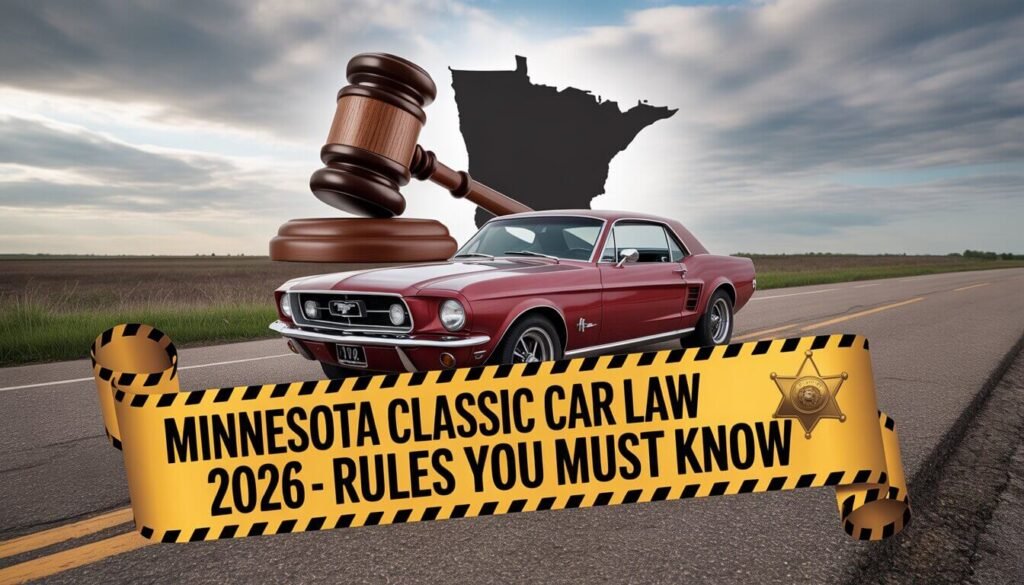
If you own a classic car in Minnesota – whether it’s a rusty barn find or a fully restored ’67 Mustang – you need to understand Minnesota classic car law inside out. One wrong move, and you could face fines, registration cancellation, or even having your car impounded.
In this 2000+ word guide, I’ll break down:
- What legally counts as a “classic car” in MN
- Collector vs. Pioneer plates – which one is better?
- Where and when you can drive (hint: not to work)
- Insurance requirements that nobody talks about
- Emissions & safety exemptions
- Street rods, replicas, and out-of-state titles
- Common mistakes that get people in trouble
Let’s dive in.
What Does Minnesota Classic Car Law Actually Say?
Minnesota classic car law is primarily found in Minnesota Statute 168.10 (Special Plates) and Minnesota Rule 7400.1100. Unlike some states that use the term “antique” or “historic,” Minnesota separates vehicles into two legal classes:
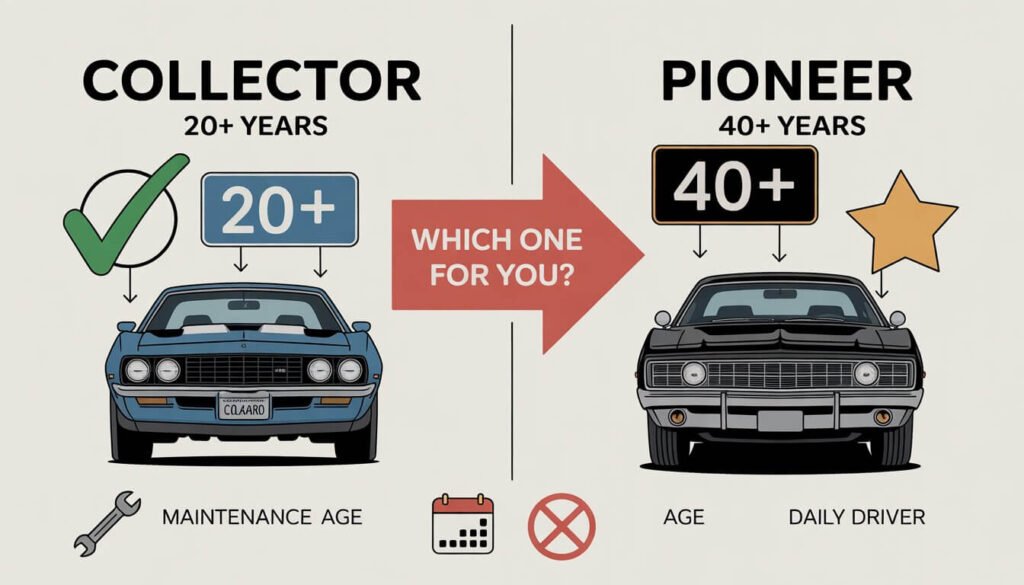
- Collector’s vehicle – at least 20 years old
- Pioneer vehicle – at least 40 years old (or manufactured before 1942 in some interpretations)
Under Minnesota classic car law, the vehicle must be owned solely as a collector’s item – not for daily transportation.
That last part is critical. If you drive your classic to work every day, you’re violating the law, even if you have the right plates.
Collector vs. Pioneer Plates – Key Differences
Many owners ask: Which plate should I get under Minnesota classic car law?
| Feature | Collector Plate | Pioneer Plate |
|---|---|---|
| Age requirement | 20+ years | 40+ years |
| Plate design | Standard collector design | Vintage-style (year of manufacture allowed in some cases) |
| Annual fee | ~$25 plus regular registration | ~$15 plus regular registration |
| Usage restrictions | Same as collector | Same (no daily driving) |
| Eligibility for YOM plates | No | Yes (Year of Manufacture plates allowed) |
Under Minnesota classic car law, both plate types allow you to display a Year of Manufacture (YOM) plate on the rear, but only Pioneer vehicles can fully replace the state-issued plate with a restored vintage plate (with proper approval).
Pro tip: Most hobbyists prefer Pioneer plates for pre-1980s cars because of the vintage look and lower fees. But if your car is from 1995 (20+ years old in 2026), you can only get Collector.
How to Register Your Classic Car in MN – Step by Step
To comply with Minnesota classic car law, you must register at a DMV (Driver and Vehicle Services) office. Online registration is not available for collector plates.
Step 1 – Confirm eligibility
- Vehicle age (20+ years for Collector, 40+ for Pioneer)
- You must own at least one other regularly registered vehicle (proves this is not your daily driver)
Step 2 – Gather documents
- Current title (or previous registration if out-of-state)
- Proof of insurance (see section below)
- Completed Application for Collector or Pioneer Plate (PS2000 form) – available at quickbuzzx.com
- Payment for fees (registration + plate fee)
Step 3 – Vehicle inspection (sometimes)
Under Minnesota classic car law, if your car was never titled in Minnesota or is from out-of-state, a VIN inspection by law enforcement or a DVS agent is required. No safety inspection, just VIN verification.
Step 4 – Receive plates and stickers
You’ll get a set of Collector/Pioneer plates. Renewal is annual, but some long-term options exist for Pioneer vehicles.
⚠️ Important: You cannot transfer Collector or Pioneer plates to another person. If you sell the car, the plates go back to the state.
Where and When Can You Drive? (Usage Restrictions)
This is where most people violate Minnesota classic car law. The statute says a collector or pioneer vehicle may be operated only for:
- Club activities (car shows, meets, rallies)
- Parades (with prior approval)
- Educational or exhibition purposes (museum displays, school events)
- Maintenance and repair (test drives, mechanic visits)
- Occasional pleasure driving (but not defined – courts have interpreted as “less than 1,000 miles per year”)
What is explicitly banned under Minnesota classic car law:
- Regular commuting to work or school
- Commercial use (delivery, rideshare, hauling for hire)
- Driving as a primary vehicle (more than 50% of your total mileage)
Real-world example: A 2023 Ramsey County case fined a man $500 for driving his 1970 Challenger to his office 3 times a week. He argued it was “pleasure” – the judge said no.
👉 Golden rule: If you need the car to get somewhere on time every day, you’re breaking Minnesota classic car law.
Insurance Requirements – Don’t Skip This
Unlike regular cars, Minnesota classic car law does NOT mandate a specific type of insurance, but you must carry at least the state minimum liability:
- $30,000 per person injury
- $60,000 per accident injury
- $10,000 property damage
However, most classic car insurance policies (like Hagerty, Grundy, Heacock) require you to:
- Store the car in a locked garage
- Keep mileage under 2,500–5,000 per year
- Not use the car for daily driving
If you file a claim while violating usage restrictions, your insurer may deny coverage. And under Minnesota classic car law, driving without valid insurance = license suspension + $400 fine.
Emissions & Safety Testing – What’s Exempt?
Good news for classic owners: Minnesota classic car law provides a full emissions exemption for vehicles:
- Model year 1995 or older (in most metro counties)
- All vehicles 1975 and older are exempt regardless of county
But wait – doesn’t Minnesota have emissions testing?
Actually, Minnesota ended its centralized emissions testing program in 2011. However, some counties (Hennepin, Ramsey, Dakota, Washington, Anoka) still require a test-only for certain newer cars during ownership transfer. But for classics 20+ years old? Zero testing.
Safety inspections: Minnesota has no periodic safety inspections for any vehicle, classic or not. So you don’t need to worry about brake or light checks.
That’s one part of Minnesota classic car law that owners love.
Street Rods, Replicas & Kit Cars – Special Rules
What if your classic is a 1932 Ford highboy replica built in 2015?
Under Minnesota classic car law, a replica is treated as the year it was manufactured, not the year it replicates.
So a 2015 replica of a 1932 Ford gets standard plates, not Collector or Pioneer.
However, if the replica uses at least 80% original parts from a donor vehicle that is 20+ years old, you may qualify for Street Rod plates (Statute 168.10 subd. 1c).
Street rod requirements:
- At least 25 years old
- Modified from original (engine, suspension, etc.)
- Not a daily driver
- Same usage restrictions as Collector plates
Many people ignore this part of Minnesota classic car law and get fined. Don’t be that guy.
Out-of-State Titles & Imported Classics
If you buy a classic from Florida or California and bring it to Minnesota, Minnesota classic car law requires:
- VIN inspection by police or DVS
- Proof that the out-of-state title is clean (no salvage unless rebuilt)
- Payment of motor vehicle sales tax (6.5% of purchase price or book value)
For Canadian or European imports (e.g., 1970s Jaguar, Alfa Romeo), you’ll need:
- EPA and DOT import letters (if under 25 years old – but most classics are over 25, so exempt)
- Customs Form 7501
- Translation of foreign title (if not in English)
Once titled in MN, the car follows standard Minnesota classic car law for plates and usage.
5 Common Mistakes That Violate Minnesota Classic Car Law
Let me save you from expensive tickets.
❌ Mistake #1 – Driving to work “just this once”
Under Minnesota classic car law, even one trip to work can be cited if caught. Police can check your employment location and routine.
❌ Mistake #2 – No odometer disclosure
When selling a classic, you still need to complete Odometer Disclosure Statement (if car is less than 20 years old? Wait – classics over 20 are exempt from federal odometer law, but Minnesota requires disclosure if the title has a mileage box. Many forget and the sale becomes void.
❌ Mistake #3 – Using Collector plates on a daily driver
You’d be shocked how many people register their only car as “collector” to save $50. The DMV cross-references with insurance and other registered vehicles. If you have no other car in your name, they’ll reject or revoke.
❌ Mistake #4 – Not updating address after move
Minnesota requires address change within 30 days. If you move from Minneapolis to St. Paul and don’t update, your registration is technically invalid. Police can ticket.
❌ Mistake #5 – Letting insurance lapse
If your Hagerty policy expires and you’re caught driving, it’s a misdemeanor under Minnesota classic car law. Minimum $200 fine plus court costs.
Penalties for Violating Minnesota Classic Car Law
What happens if you break the rules?
| Violation | Penalty |
|---|---|
| Daily driving with Collector plates | $150 fine + possible plate revocation |
| No insurance | $400 fine + license suspension up to 1 year |
| Fictitious plate display (e.g., using YOM plate without authorization) | $300 fine + misdemeanor charge |
| Selling with false mileage | Up to $1,000 fine + civil liability |
Yes, police do enforce Minnesota classic car law – especially during car shows when they set up checkpoints
Frequently Asked Questions (FAQ)
Q1: Can I drive my classic car in winter in Minnesota?
Yes, but salt will destroy it. There’s no legal ban on winter driving under Minnesota classic car law, but your insurance might not cover rust damage if you drive on salted roads.
Q2: Do I need front license plate on a classic?
Under Minnesota classic car law, all vehicles require both front and rear plates unless you have an approved Year of Manufacture plate on the rear and a collector plate on the front? Actually, the law says you must display the state-issued plate on the rear. Front plate can be anything (or nothing) for collector vehicles? I recommend checking – but most owners run both to avoid stops.
Q3: Can I use my classic for Uber or Lyft?
Absolutely not. Commercial use is explicitly banned.
Q4: What’s the oldest vehicle eligible for Pioneer plates?
Any vehicle manufactured before 1942 automatically qualifies. But also any car 40+ years old – so in 2026, a 1986 car qualifies for Pioneer? Wait, 1986 is 40 years old? 2026 – 1986 = 40, yes. So many 1980s cars can now get Pioneer plates.
Q5: How does Minnesota classic car law treat electric conversions?
If you convert a 1970s VW Beetle to electric, it still keeps its original year for registration. No special EV rules for classics – yet.
Final Thoughts – Stay Legal & Enjoy the Ride
Understanding Minnesota classic car law isn’t optional – it’s the difference between a fun weekend hobby and a costly legal headache. The good news: Minnesota is one of the more classic-friendly states with low fees, no safety inspections, and generous emissions exemptions.
Just remember:
- Get the right plates (Collector or Pioneer)
- Don’t drive to work
- Keep insurance active
- Store it indoors
If you follow this guide, you’ll never have a problem. Now go fire up that V8 – just take the scenic route, not the commute.
Pingback: Minnesota banning classic cars Is Minnesota Banning Classic Cars The Shocking Truth Every Owner 2026